
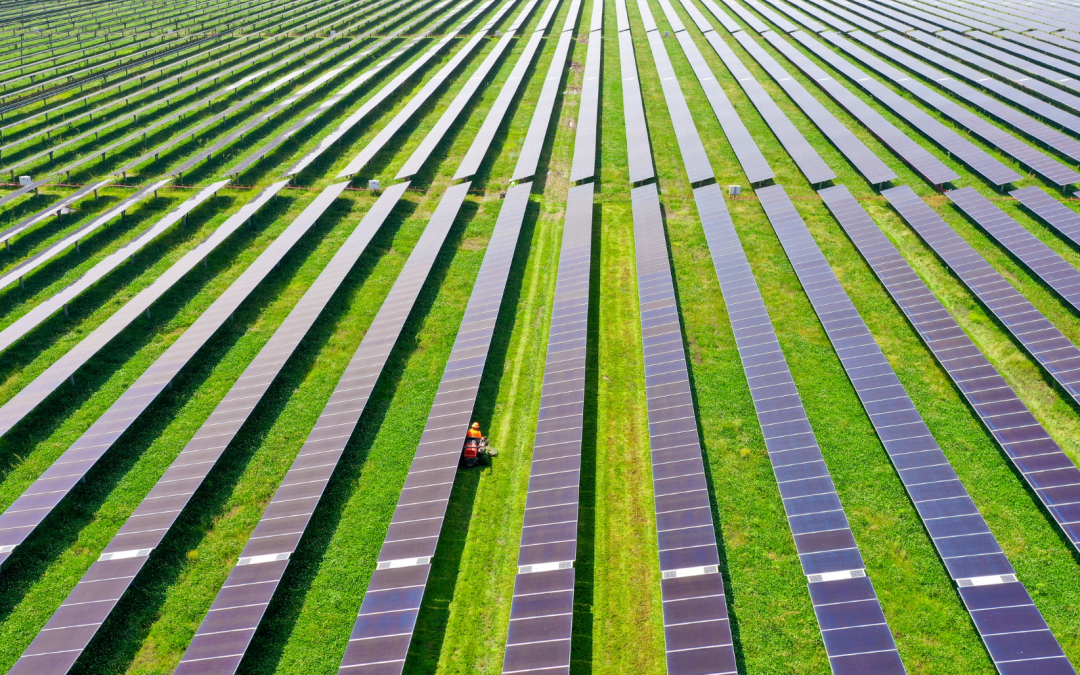
Vegetation management plays a critical role in the long-term performance, accessibility, and operational efficiency of solar sites. However, many solar vegetation programs still rely heavily on repetitive mowing cycles that create recurring maintenance costs without addressing long-term vegetation conditions.
As solar infrastructure continues to expand across the country, operators are increasingly looking for more efficient and sustainable approaches to site maintenance.
SmartSOLAR™ and Integrated Vegetation Management (IVM) provide a long-term vegetation strategy designed to reduce maintenance frequency, improve site stability, and lower overall operational costs.
The Problem with Repetitive Solar Field Mowing
Traditional solar field maintenance programs often depend on frequent mowing cycles to control vegetation growth around panels, fencing, and access roads.
While mowing temporarily restores site visibility and accessibility, it often creates an ongoing cycle of:
- repetitive fuel usage
- recurring labor costs
- equipment wear and maintenance
- repeated mobilization expenses
- continued vegetation regrowth pressure
Over time, these repetitive cycles can significantly increase long-term maintenance costs across large solar sites.
In many cases, repeatedly mowing aggressive vegetation also fails to create stable long-term vegetation conditions.
Moving Beyond Mowing with IVM
Integrated Vegetation Management (IVM) focuses on managing vegetation strategically rather than repeatedly cutting it back.
Instead of applying the same maintenance approach across the entire site, IVM evaluates:
- vegetation type and density
- terrain conditions
- drainage patterns
- accessibility requirements
- long-term regrowth pressure
This allows operators to implement targeted vegetation management strategies that improve long-term site stability while reducing recurring maintenance demands.
SmartSOLAR™ applies these IVM principles specifically to solar environments.
Reducing Maintenance Frequency and Fuel Usage
One of the primary goals of SmartSOLAR™ is reducing the frequency of repetitive mowing operations.
Strategic vegetation management may include:
- targeted herbicide applications
- establishment of low-growing native grasses
- selective vegetation control
- stabilization of low-maintenance vegetation zones
As vegetation conditions stabilize, operators can often reduce:
- mowing frequency
- fuel consumption
- repetitive equipment usage
- ongoing labor requirements
This not only lowers operational costs, but also reduces the long-term environmental footprint associated with repeated mechanical maintenance.
Supporting Native Grasses and Pollinator Areas
In appropriate environments, SmartSOLAR™ programs may also support the establishment of native grass and pollinator-friendly vegetation areas.
Low-growing native vegetation can help:
- suppress aggressive woody growth
- stabilize soil conditions
- reduce erosion
- improve long-term vegetation consistency
Certain native vegetation profiles may also provide opportunities for:
- pollinator-supportive plant growth
- habitat diversity
- improved environmental stewardship initiatives
These efforts must always remain compatible with operational access, panel performance, and long-term site maintenance objectives.
Improving Accessibility and Operational Efficiency
Vegetation management directly impacts the ability to safely access and maintain solar infrastructure.
Overgrown or inconsistent vegetation can:
- limit technician access
- obstruct maintenance routes
- reduce visibility around equipment
- increase maintenance difficulty during wet conditions
Strategic vegetation management helps maintain:
- clear access paths
- consistent site visibility
- stable ground conditions
- more predictable maintenance environments
This improves overall operational efficiency across the solar field.
Creating More Stable Long-Term Site Conditions
Repeated mowing alone often creates temporary results rather than long-term vegetation stability.
SmartSOLAR™ focuses on establishing vegetation conditions that require less aggressive intervention over time.
This allows operators to move away from reactive maintenance cycles and toward:
- predictable maintenance schedules
- reduced vegetation pressure
- lower long-term maintenance costs
- more sustainable site conditions
As vegetation stabilizes, solar sites become easier and more cost-effective to maintain.
A Smarter Long-Term Approach to Solar Vegetation Management
Solar vegetation management should not be viewed simply as a recurring mowing program. It should be treated as a long-term operational strategy focused on site performance, accessibility, and sustainability.
By integrating IVM principles into solar field maintenance, SmartSOLAR™ helps operators:
- reduce mowing frequency
- lower fuel and labor costs
- improve accessibility
- support long-term vegetation stability
- establish more sustainable site conditions
As the solar industry continues to grow, strategic vegetation management will play an increasingly important role in maintaining efficient, accessible, and environmentally responsible solar sites.