
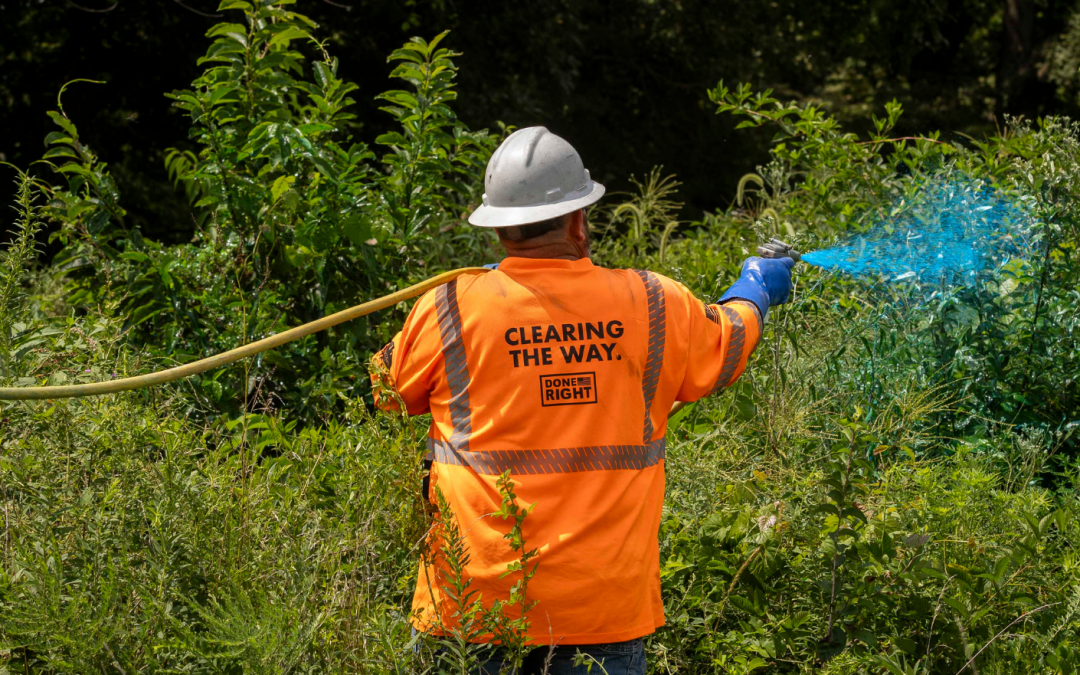
Integrated Vegetation Management (IVM) is a long-term approach to managing vegetation along right-of-way (ROW) corridors. Rather than relying on repeated clearing cycles, IVM focuses on controlling vegetation growth in a way that reduces long-term maintenance requirements while improving safety and accessibility.
In pipeline environments, where consistent access and visibility are critical, IVM provides a more effective and sustainable alternative to traditional vegetation clearing methods.
Moving Beyond Repetitive Clearing
Traditional vegetation management often relies on repeated mechanical clearing. While this removes vegetation in the short term, it does not address the underlying conditions that drive regrowth.
As a result, operators may experience:
- rapid return of woody vegetation
- increasing maintenance frequency
- higher long-term costs
- inconsistent corridor conditions
IVM shifts the focus from removal to control.
Instead of clearing vegetation repeatedly, the goal is to manage the type, density, and growth patterns of vegetation within the corridor.
Core Components of IVM
Integrated Vegetation Management combines multiple methods to achieve long-term vegetation control.
These methods may include:
- mechanical clearing to remove existing woody growth
- targeted herbicide applications to slow or prevent regrowth
- selective treatment of high-pressure vegetation zones
- establishment of low-growing vegetation to stabilize the corridor
The goal is to create a vegetation profile that:
- limits woody growth
- improves visibility
- supports inspection and access
- reduces long-term maintenance requirements
Improving Pipeline Safety and Accessibility
A properly managed right-of-way improves both safety and operational efficiency.
By reducing dense vegetation, IVM helps:
- maintain clear visibility of pipeline markers
- improve access for inspections and maintenance
- support aerial and ground patrol effectiveness
- reduce third-party damage risk
These factors are critical in maintaining pipeline integrity and meeting regulatory requirements.
Reducing Long-Term Maintenance Costs
One of the primary benefits of IVM is its impact on long-term cost.
By reducing vegetation regrowth, operators can:
- extend maintenance cycles
- reduce the frequency of full clearing operations
- minimize corrective work
- stabilize vegetation management budgets
Instead of reacting to vegetation growth each season, operators can manage it proactively.
Adapting to Terrain and Corridor Conditions
Right-of-way corridors vary significantly depending on terrain, soil conditions, and surrounding environments.
IVM allows operators to apply different strategies based on these conditions.
For example:
- steep slopes may require stabilization with ground cover
- wooded areas may require targeted removal of specific species
- open areas may benefit from maintaining low-growing vegetation
This flexibility improves overall corridor performance and reduces the likelihood of recurring issues.
A Strategic Approach to Vegetation Management
Integrated Vegetation Management is not a single activity—it is an ongoing strategy.
By combining mechanical, chemical, and environmental methods, IVM provides a more stable and predictable approach to managing vegetation along pipeline corridors.
For operators, this results in:
- improved safety and visibility
- more effective inspections
- reduced long-term maintenance costs
- better overall corridor conditions
As pipeline systems continue to expand, adopting long-term vegetation management strategies such as IVM becomes increasingly important for maintaining safe and reliable infrastructure. Lanracorp’s Smart-ROW program is an example of a very strategic program that includes IVM, GIS, and even potentially AI to help lower costs long term.